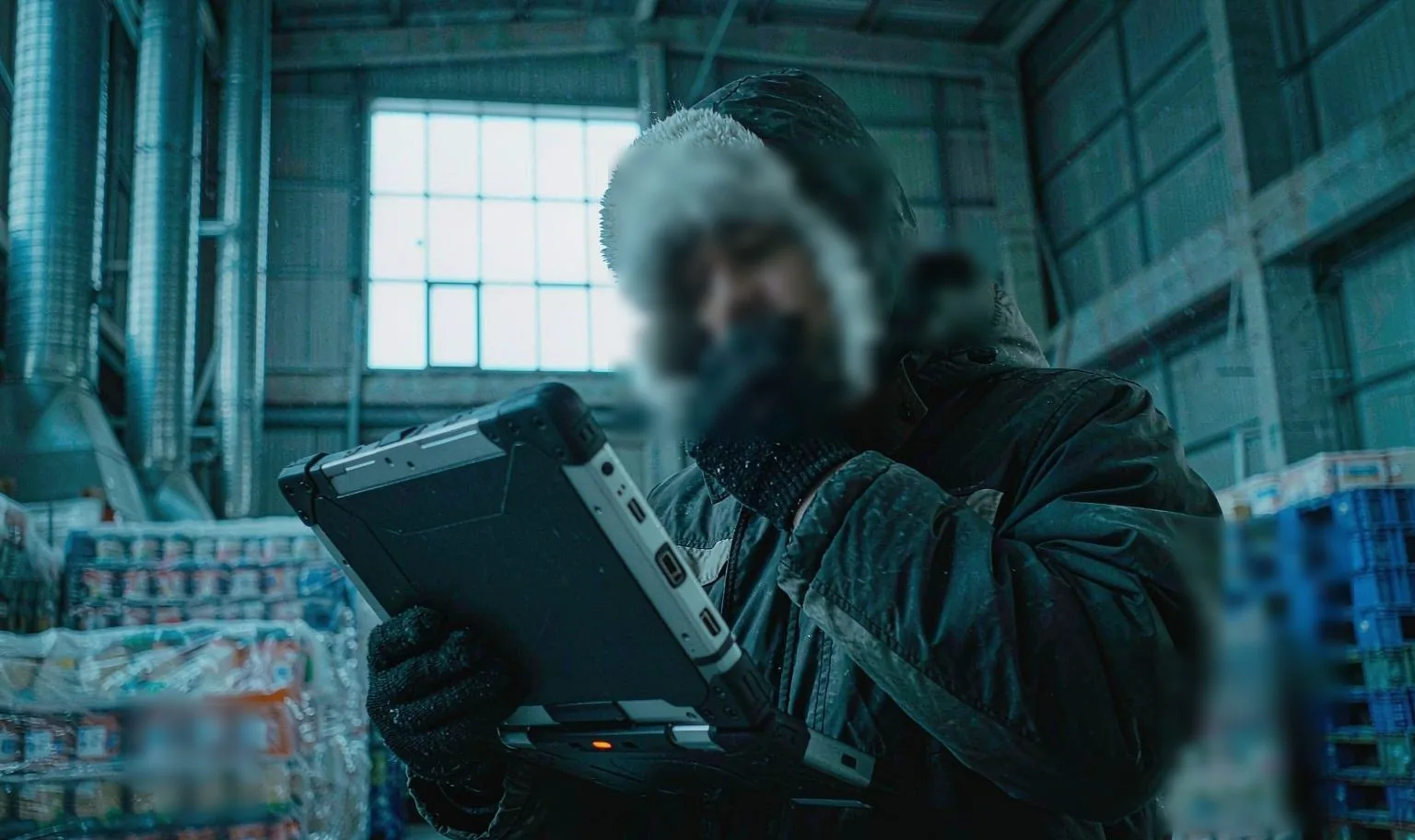
Cold-store hardware projects are usually specified on a single number: runtime hours at low temperature. It is the number suppliers compete on and the number buyers compare, and it is close to useless — because shifts in a freezer rarely fail on runtime. They fail on condensation, on touch response with a wet glove, and on the logistics of swapping a battery in a room where nobody wants to stand.
What actually happens to a device at −25 °C
The battery loses capacity, and not linearly. Lithium-ion cells lose a significant fraction of usable capacity below zero; the exact figure depends on cell chemistry, discharge rate and how long the pack has been cold. A pack that runs ten hours at 20 °C will not run ten hours at −25 °C. Treat any single runtime figure as an ambient-temperature statement unless the supplier says otherwise in writing.
Charging below zero damages the pack. Most lithium-ion cells must not be charged below roughly 0 °C without internal heating. In practice this means devices come out of the freezer to charge — which is exactly the moment they are covered in condensation.
Condensation forms on the coldest surface. Moving a device from −25 °C to a +18 °C packing hall fogs the scan window and the screen within seconds. The fog does not clear in five seconds; it clears when the device reaches ambient, which can take ten minutes or more. During that window, scanning stops.
Capacitive touch does not respond to a wet glove. This is the failure that generates the most complaints and the least sympathy. A nitrile glove with frost on it is electrically and optically nothing like a finger. Glove mode and a resistive-compatible design both help; neither is magic.
The metrics that actually predict a working shift
Replace runtime hours with these four:
| Metric | Why it matters | How to specify it |
|---|---|---|
| Swap cadence | Determines how many packs per device per shift | Ask for packs per device per shift at your temperature, not hours |
| Warm-side logistics | Charging must happen outside the cold room | Number of charging bays and where they sit |
| Fog recovery time | The real cause of scan failures | Test: freeze 30 min, move to ambient, time until first successful read |
| Glove-mode read rate | Whether staff can work at all | Test with your glove, not a generic one |
A workable pattern
The deployments that hold up tend to converge on the same shape, regardless of vendor:
- Two packs per device per shift, rotated. One in the device, one warm in an inner pocket or a heated cabinet by the door.
- Charging happens in the warm zone only. A small bank of chargers immediately outside the cold room door, not inside it.
- A microfibre wipe on a tether at each door. Unglamorous, and it removes 80% of fog complaints.
- Batch scanning over live scanning where the app allows it. A pick list validated at the door is more reliable than a live API call from inside the freezer.
- One spare device per ten, kept warm. Cold devices that fail tend to fail all at once after a defrost cycle.
None of this is in a datasheet. All of it decides whether the project works.
What the hardware has to provide
Given the above, the requirements list looks different from the usual one:
- Wide operating temperature stated with the discharge curve, not just a range
- Removable battery — because swappable beats long-runtime in a freezer
- Glove and wet-hand touch mode on the actual model you buy, not on the series
- Sealed, gasketed scan window that can be wiped without ingress
- IP65 minimum, and a housing that tolerates being set down on a wet floor
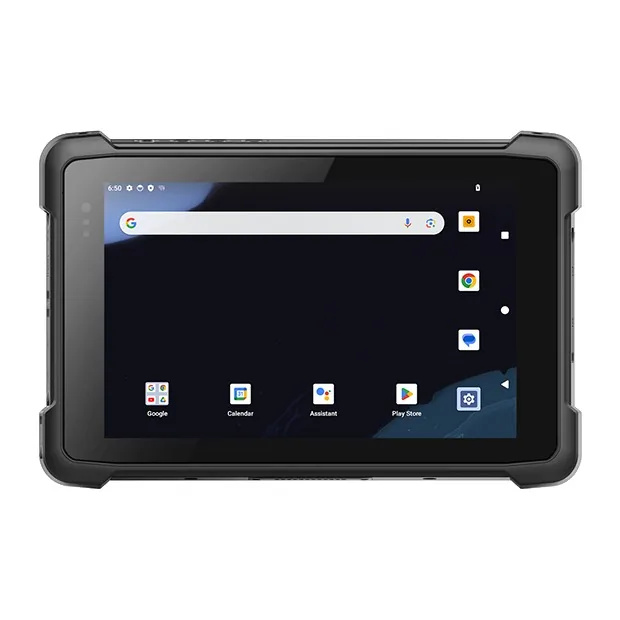
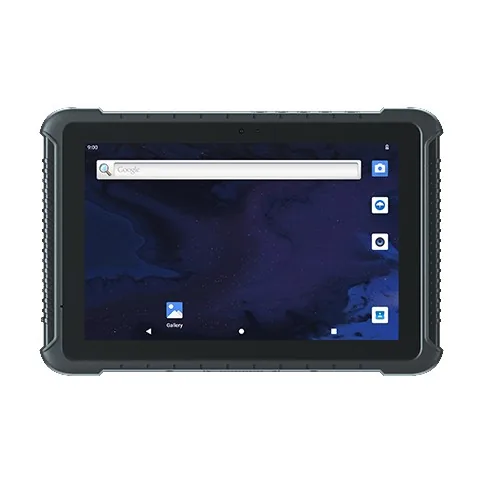
The M87J is the model we usually quote for freezer work because the battery is removable and the housing is simple enough to wipe down. The H68T suits cold-store picking where the operator moves between zones and needs a handheld rather than a tablet. For a −30 °C blast freezer, we will tell you honestly that no standard rugged device is comfortable and the process has to change.
The audit dimension
Food and pharmaceutical cold chains are audited, and the audit asks a specific question: was every handover scanned, and can you prove it.
That makes offline tolerance a hardware requirement, not a nice-to-have. The device has to hold a full shift of scans with no connectivity and sync without losing sequence. If the app was designed assuming a live connection, the hardware cannot fix it — but choosing a device with reliable local storage and a predictable sync stack at least removes one variable.
What to send us
To size a cold-chain device properly we need four things: the temperature range the device will actually see (not the room's nominal setpoint), the number of packs you are willing to rotate, your glove type, and whether the app is offline-capable.
Send a glove and we will test with it. It is a strange request and it is the single most useful thing you can do before committing a fleet.