Bright Alliance Tech Limited · Shenzhen factory liaison, direct prince@brightalliance.net WhatsApp +86 158 8972 3515
Commercial Fishing & Marine — application environment
Deployment

Commercial Fishing & Marine

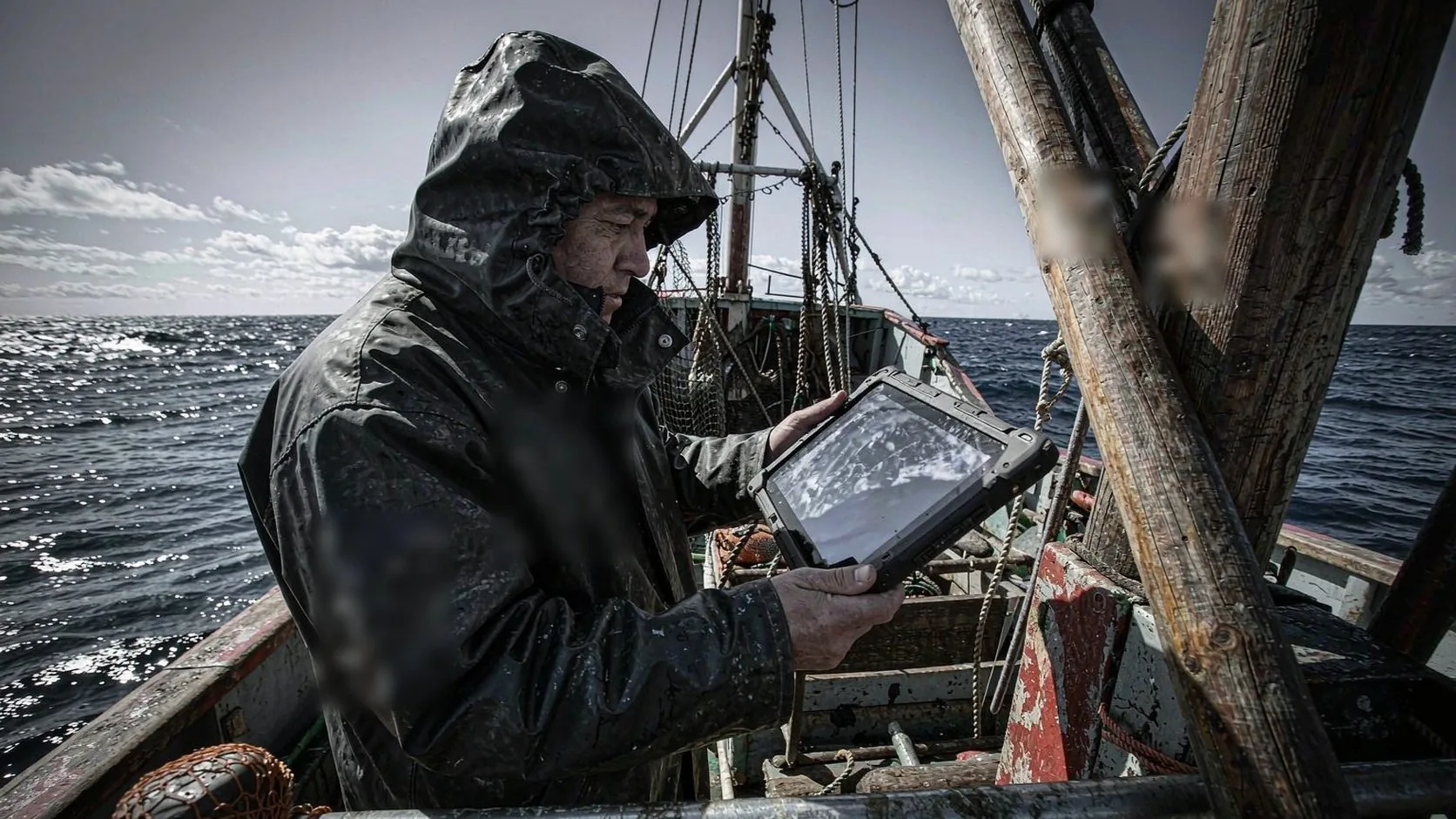
A deck at noon is the hardest reading environment there is. Most rugged tablets are specified for a warehouse.

The purchase decision on a vessel is not made on processor or storage. It is made on three things: whether the screen can be read in direct sun, whether the battery can be changed with wet hands, and whether the device is still working in month eight when salt has reached every exposed contact. Devices sold as waterproof usually fail the first test outright, because brightness and ingress protection are specified by different teams and marketed by a third. We quote marine work on a different basis: measured luminance, removable power, replaceable port protection, and a mounting ecosystem that survives a season.

Who actually makes the purchase

Fishing companies, fleet operators, vessel electronics integrators and port agents handling catch registration, grading, cold-store inventory and quota reporting.

Where these projects stall

Typical software in this stack
Catch registrationGrading and weighingCold-store inventoryQuota reportingPort handoverSatellite and AIS
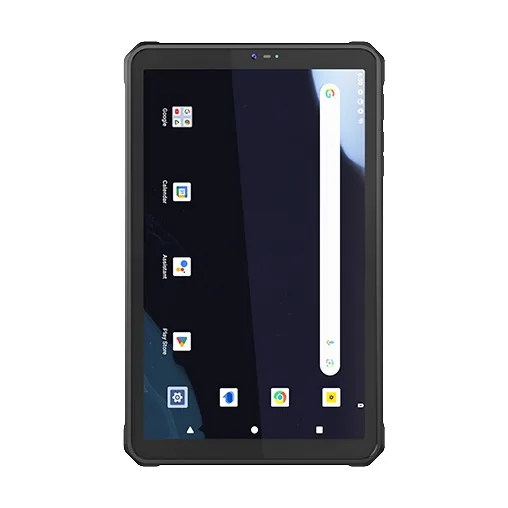
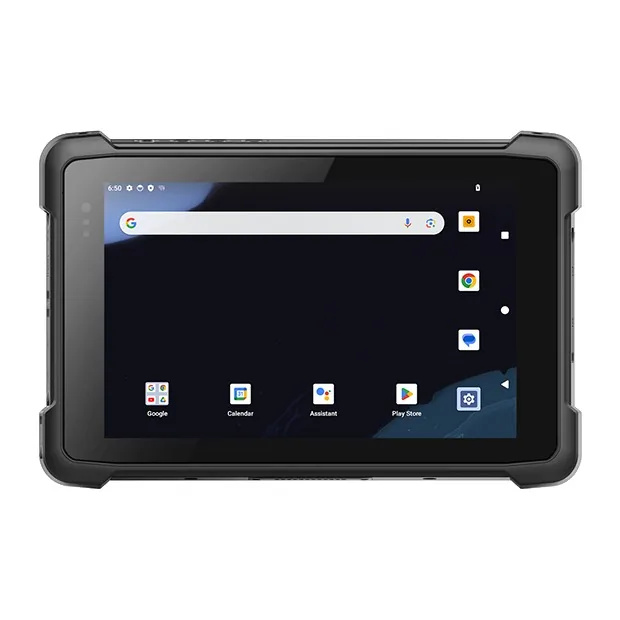
Devices quoted here: 3
Send this requirement
01

The screen is a mirror at midday

Open water, white deck and direct sun push ambient light past 80,000 lux. Panels below 1000 cd/m2 are readable in the wheelhouse and unreadable on deck, which is where the work happens.

02

The battery cannot be swapped

Vessel power is intermittent. A sealed device that needs three hours on a charger is unavailable for three hours. A removable pack changes the uptime calculation more than any IP rating.

03

Salt kills the ports first

Housings hold. The failure is a corroded USB pin, a crystallised pogo contact, a rubber flap that stopped seating after a year. Most rugged tablets are never tested to IEC 60068-2-52.

04

The catch report does not match the office system

Land-side ERP expects one format, the tablet app exports another. The gap is discovered at the end of the first trip, with the data already recorded twice.

Usage scenario

How the work actually runs

At sea the device is not a tool, it is the only record. Salt, spray, gloves, a moving deck and no network — everything has to work first time and store until the boat is back in range.

Commercial Fishing & Marine — on site
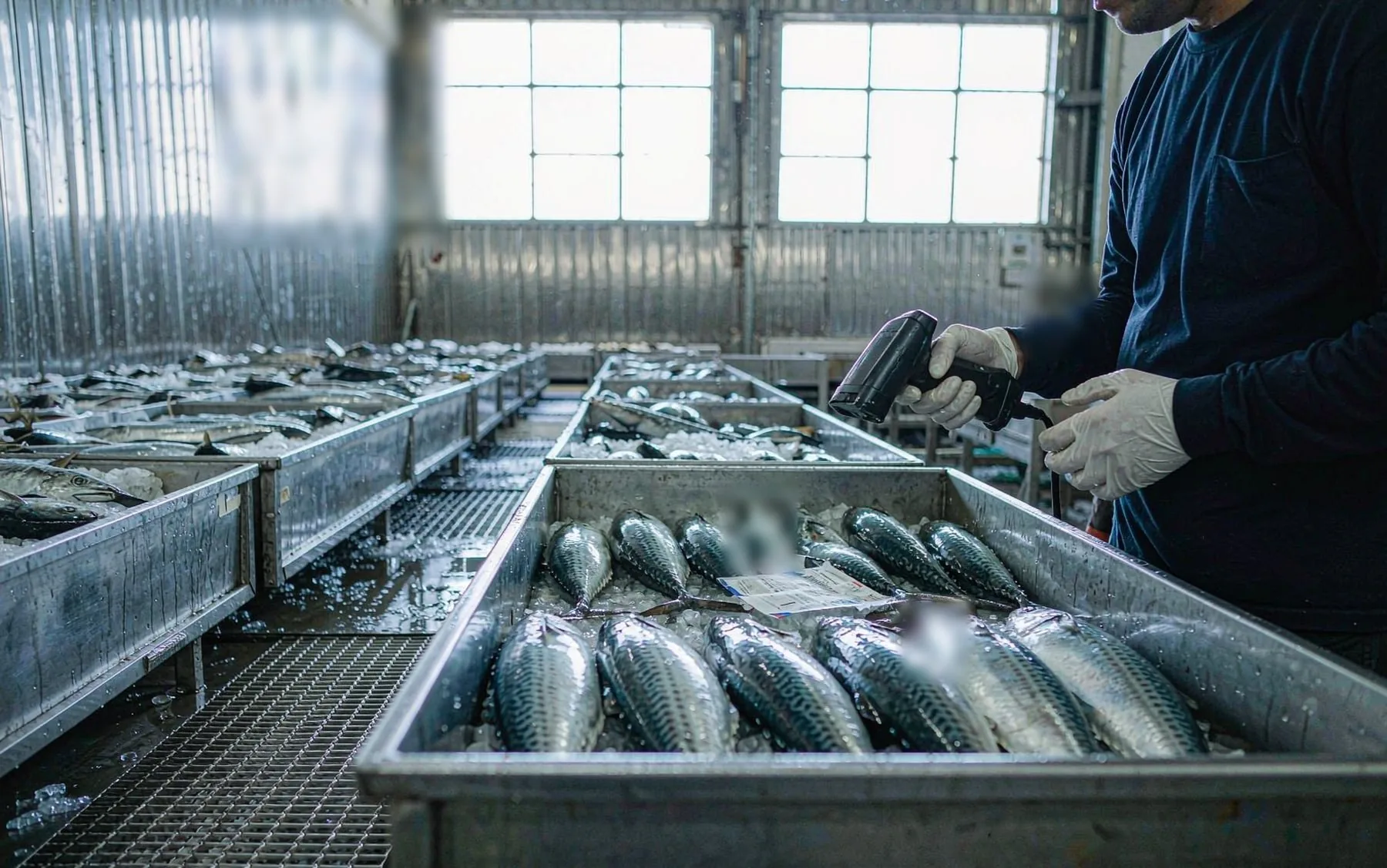
ON SITEProcessing line, crate label scanned at the belt

01The loop on deck and at the quay

Workflow
  • Catch or batch registration — species, weight, grade, vessel, time.
  • Cold-room and hold checks — temperature logs tied to the batch.
  • Traceability — tag to box to pallet to container, no gaps.
  • Landing and auction handover — weight confirmation and signature.
  • Compliance records — quota, certification, crew and inspection notes.

02What the environment forces

Selection
  • Handheld rather than tablet — one hand is holding the rail.
  • High IP rating, salt-fog tested housing and ports.
  • Glove-operable keys, wet-finger touch.
  • GNSS that holds a fix offshore, plus offline-first storage.

03Spec items that matter offshore

Spec
  • IP67 or better, with sealed connectors rather than rubber flaps.
  • Salt-spray resistance on the housing and the screen coating.
  • Replaceable battery, charged from the vessel supply.
  • Storage that survives a week offline without losing a record.

04What the pilot has to prove

Pilot
  • A full trip on one charge with the traceability app running.
  • Scanning wet, icy and salt-crusted labels.
  • Sync after days offline, with no duplicate batch records.
  • Survival of a drop onto a steel deck.
  • Readability in low sun and through a wet visor.
Data flow

How the information actually moves

This is the part that decides the device. Each step below has a different requirement for screen size, scan engine and connectivity.

01Catch registration on deckSpecies, volume and time captured where the fish are landed, on a high-brightness panel legible with the sun behind the operator.
02Grading and weighingDevice paired to the deck scale, results written straight into the lot record instead of a paper slip that gets wet.
03Cold store and hold inventoryBarcode counts against hold capacity on an 8-inch unit that fits between racks, where a 10-inch tablet does not.
04Port handoverLot records transferred to the buyer or agent at the quay, on the same device, without re-keying.
05Fleet reporting and positionCatch and position data sent to the fleet office over cellular where available and satellite where it is not.
Questions we get

Before you ask

The questions that come up on almost every project in this sector, answered before the first call.

All questions
01What brightness do we actually need on deck?
1000 cd/m2 is the entry point for open-deck work in direct sun, and it has to be the standard panel rather than an optional upgrade, because an option that has to be ordered becomes a delay on every batch. Below that figure the device is a wheelhouse and cabin tool. Anti-glare cover glass matters as much as the number, because reflectance puts the sky on top of the content.
02Is IP68 enough on its own?
No, and it is the most misleading single number in this category. Plenty of IP68 tablets are sealed correctly and carry panels at 320 to 450 cd/m2, which makes them poolside devices. Ingress protection answers one question, whether water can get in, and says nothing about readability, salt corrosion, battery access, or whether the port covers still seat after a year.
03Can the battery really be changed at sea?
On the models we quote for cabins and processing areas, yes. The pack is removable and spares ship with the order. We recommend two packs per device up front, because the incremental cost is small against a crew waiting for a charge.
04Do you supply the satellite and radio side as well?
Yes, as a separate line. A multi-mode terminal covers satellite voice and short message, digital radio and AIS reception in one housing. It is quoted separately because frequency allocation and airtime are country-specific, and the same model is legal in one fishing ground and not in the next.
05Can you supply five units for a pilot?
Yes. A pilot is the normal entry point. We quote single units at sample pricing and support the pilot with spare parts on the same order — a spare battery and a cradle, not a pallet.
06Do the Android units ship with GMS?
Most Android models ship with GMS. For builds where Google services must be absent, we supply a GMS-free firmware on the same hardware — say so at the quotation stage, because it is a firmware decision, not a setting.

Running a marine project?

Send the workflow and the software stack. You will get two models and the caveats, not a catalogue.

Chat with Prince · WhatsApp