An export lot of shrimp or tuna may need to answer four questions at audit: which pond or vessel, which feed batch, which processing run, how long in which cold store. Answering those from paperwork after the fact is how shipments get held at the border. Answering them at line speed is what traceability hardware is for — and seafood plants are among the hardest places on earth to put electronics.
Why consumer devices fail here in one season
A seafood plant combines every failure mode: salt-laden air, ice slurry on the floor, high-pressure hose-down between runs, sub-zero cold stores, and hands that are wet and gloved all shift. Unprotected tablets and phones fail from corrosion and connector damage within months — usually at the worst time, during peak landing season.
What survives:
- Sealed, IP-rated enclosures on everything that leaves the office;
- corrosion-resistant housings and sealed ports on floor devices;
- glove-capable touch so the line never stops for a bare hand;
- fixed panel PCs behind glass or in stainless enclosures where direct wash-down hits.
The capture points that decide audit outcomes
Traceability is not a software feature — it is a set of physical scan points. If a point is skipped because the device was dead or the screen unreadable, the record is reconstructed by retyping, and auditors know what retyped data looks like.
| Capture point | What gets recorded | Device |
|---|---|---|
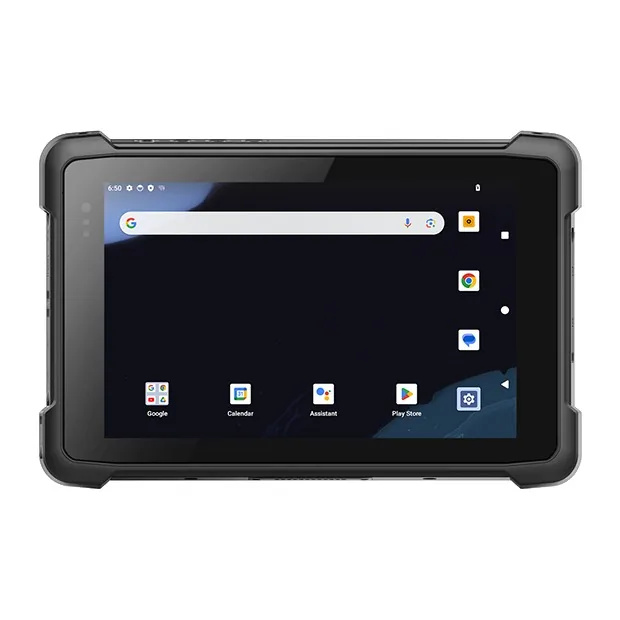
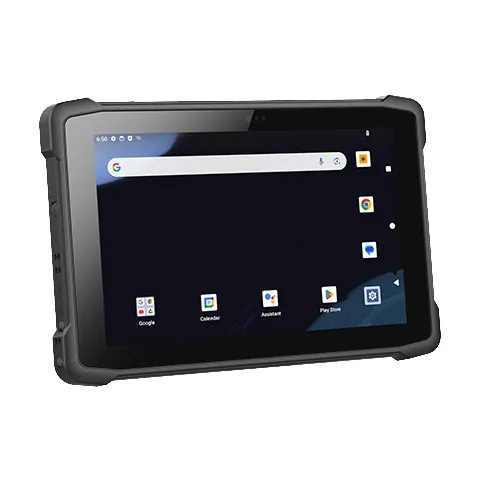
| Landing / weigh-in | Lot, vessel or pond, weight | Rugged tablet at the dock |
| Batch intake | Lot → batch link, batch label print | Handheld or tablet at intake |
| Process line | Grade, weight, quality codes | Panel PC at the line + handhelds for roaming QC |
| Cold store | Batch location, time-in | Tablet with glove touch, swap batteries outside the room |
| Dispatch | Lot history assembled into export docs | Office or tablet |
The devices are the capture layer. Your ERP or traceability platform holds the chain — the scan points are what make the record real.
What buyers and regulators actually ask for
Southeast Asian processors exporting to Japan, the EU and the US increasingly face:
- lot-level recall tests — "show us every output batch from input lot X, within hours";
- cold-chain time records — time-in and time-out per storage step;
- catch certificates linked to landings.
All three are solved by scan capture at the five points above. None is solved by a spreadsheet maintained by one diligent person — that person eventually takes leave.
Sizing the fleet for a mid-size plant
A typical starting set for a plant running two lines:
- 2–3 rugged tablets for dock, intake and dispatch;
- 2–4 handhelds for roaming QC and batch tagging;
- 1 panel PC per processing line;
- a spare pool sized for wash-down abuse, not office abuse — assume 20%.
We supply processors across ASEAN with English-language documentation and quotes sized to the plant, not the catalogue. Send us your line layout and the traceability platform you use, and we will mark the capture points and quote the fleet.