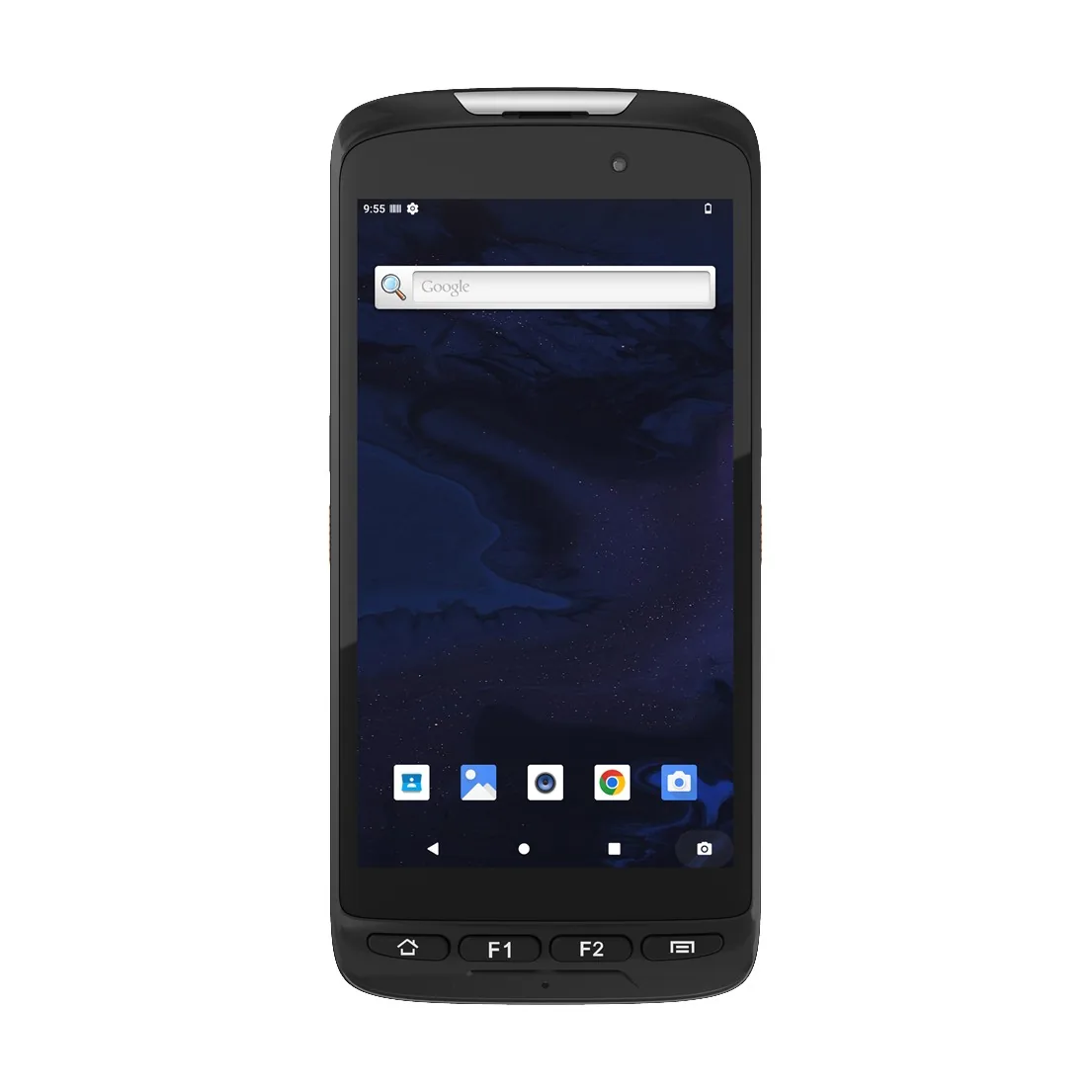
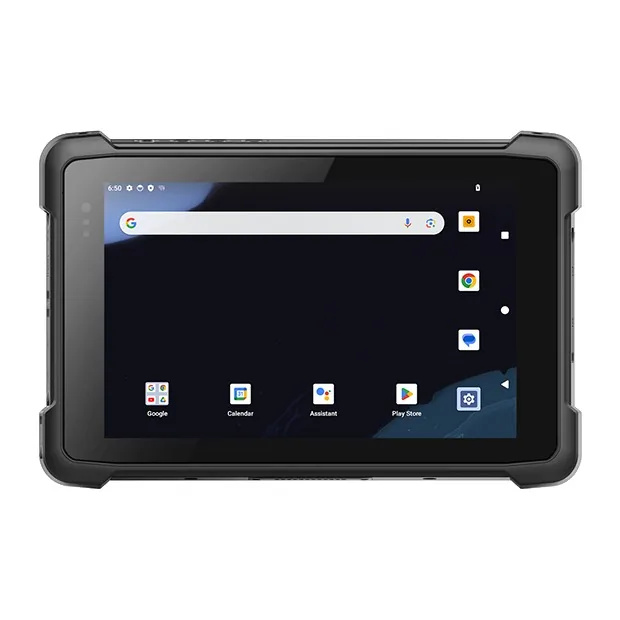
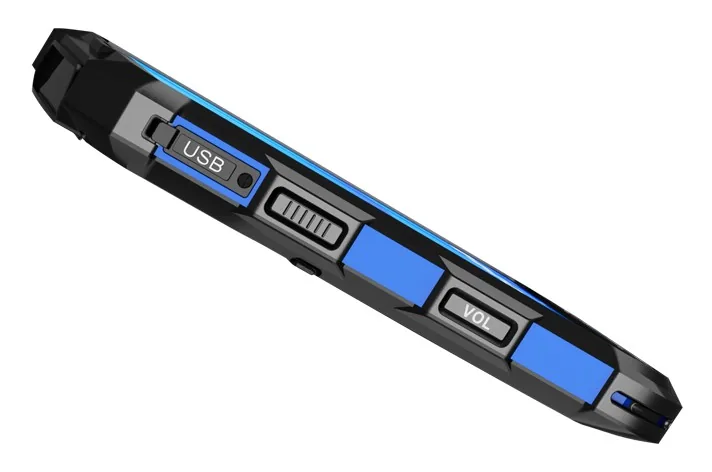
A drug recall lands at 4 p.m. on a Friday. The pharmacy has to account for every pack of the affected lot across the main store, the satellite cupboard in theatres, the ward automated cabinets, and the two emergency crash carts. The team that answers in ninety minutes with a location list is not smarter than the team that spends two days hand-searching shelves — it has a different capture stack. Its handhelds read the unit-dose 2D code at the pack, and the UHF tag on the tote, the tray and the asset, from the same terminal, in the same app.
That is the quiet argument for a hybrid rugged PDA with both a 2D imager and a UHF RFID module. Neither technology replaces the other, and the hospital that buys one and "works around" the other pays for the difference in audit hours, every single time.
Why pharmacy needs two read modes at all
Pharmaceutical packaging carries GS1 DataMatrix — mandated in most regulated markets for serialisation. It is small, dense, sometimes printed at low contrast on a curved foil blister or a 5 ml vial, and it is the only identifier that exists at the unit-dose level. A standard 2D imager struggles with 5-mil codes on glossy surfaces; a pharma-grade imager reads them in one trigger pull. There is no RFID tag on an individual pack of paracetamol, and there never will be at that price point.
Meanwhile, the things that actually move around a hospital — medication totes, controlled-drug boxes, infusion pumps, transport coolers, crash carts — are expensive enough to tag, and tagging them changes the game: RFID reads through the closed tote, at range, without line of sight, and reads many tags at once. A cycle count of a 400-item ward cupboard becomes a walk past the shelves with the trigger held, instead of a two-person, pack-by-pack scan session.
So the division of labour is clean:
| Capture | Where it lives | What it answers |
|---|---|---|
| 2D DataMatrix | Every pack, vial, carton | Which lot, which serial, which expiry — the recall question |
| UHF RFID | Totes, trays, assets, cold-chain containers | Where is it, how many, is it complete — the custody and count question |
A terminal that does only one of these forces the pharmacy onto two devices, or worse, onto clipboards.
Reading the RFID module spec honestly
UHF is a band, not a guarantee. The three lines that decide whether the module is usable in a hospital corridor:
- Region compliance. EPC Class 1 Gen 2 is the protocol; the frequency is regional (865–868 MHz in Europe, 902–928 MHz in the US, and different allocations elsewhere). A module certified for the wrong region reads tags at a fraction of its rated range or not at all. This is the most common wrong-order mistake in international projects.
- Read rate and tag population. A closed tote of 60 tagged vials is a tag-collision problem, not a range problem. Ask for the module's anti-collision throughput — how many tags per second it inventory-cycles under load — not just its maximum read distance.
- Output power and battery draw. Peak read range at full output is a lab number. What matters on the floor is reads per charge with the radio cycling: an RFID session is the most power-hungry thing a PDA does short of the flashlight. A removable 5000+ mAh pack survives a full-shift audit; a sealed consumer phone does not.
One hospital-specific trap: metal and liquid. Ward environments are stainless trolleys, saline bags and IV fluids — the worst possible neighbours for UHF propagation. Spec tags and antennas for near-metal mounting, and test the read zone in the actual pharmacy, not in the supplier's demo room.
The imager side: pharma codes are the hard case
Every vendor claims "reads 1D/2D". The pack-level question is narrower: will it read a 5-mil DataMatrix on a curved, glossy, low-contrast surface, in the 2–8 °C fridge light, first pull? Fridge condensation is real — packs pulled from cold storage fog and bead, and the imager has to cope with the wet label for the first seconds. An imager rated for 3–5 mil codes with good low-contrast performance (poor-grade barcode reading, not just " Grade A") is what separates a one-pull read from a five-second tilt-and-retry dance that doubles the length of every receiving run.
Expiry-date capture matters just as much: the best serialisation workflows read the DataMatrix and OCR the human-readable expiry as a cross-check, catching the mislabelled or short-dated pack at put-away instead of at the shelf edge three months later.
The hospital realities that break consumer hardware
The pharmacy terminal gets wiped with alcohol-based disinfectant many times a day, taken into 2–8 °C rooms and back into warm corridors, dropped onto terrazzo from trolley height, and used in gloves. The relevant specs, in order of how often they actually kill devices:
- Disinfectant-ready housing. Not "IP65" — specifically housings tested against repeated alcohol wipe cycles. Untested plastics craze, absorb, and fail at the seams within a year.
- Thermal cycling. Repeated condensation ingress is what actually defeats ingress ratings; ask about condensation testing, not just the IP figure.
- 1.5 m drop to concrete, every axis, with the battery in. Trolley height is the real drop, not pocket height.
- Glove and wet-touch operation. The pharmacy runs gloved; a panel that only tracks a dry bare finger generates more manual retries than the scanner saves.
Spec comparison: the five decisions that matter
| Decision | Specify this | Reject this |
|---|---|---|
| RFID module | EPC Gen2, your region's band, anti-collision throughput figure | "UHF RFID" with no band or rate spec |
| 2D imager | 3–5 mil DataMatrix, low-contrast and wet-label capable, OCR option | "Reads all 1D/2D" with no mil rating |
| Power | Removable 5000+ mAh packs, RFID-cycle battery figure | Sealed battery, no radio duty-cycle data |
| Housing | Disinfectant-ready, condensation-tested, 1.5 m all-axis drop | IP65 alone with no wipe-cycle data |
| Platform | Current GMS Android, MDM-enrolment ready, SDK for both capture modes in one app | Keyboard-wedge-only SDK, two separate apps for barcode and RFID |
Deployment checklist for the pharmacy lead
- Tag 40 real items — mix metal-adjacent, liquid-adjacent, tote-packed — and measure the read zone in the actual storeroom.
- Pull 20 packs from the 2–8 °C fridge and time the first-pull DataMatrix read rate on fogged labels.
- Run a full-shift mock recall on the pilot devices; the metric is hours to a complete lot map, not scan speed.
- Verify one app, one SDK, controls both the imager and the RFID module — the workflow dies if staff juggle two programs.
- Wipe a unit 20 times with your actual disinfectant and inspect the housing and key seams.
- Confirm the RFID band matches the hospital's tag estate, and any multi-site plan across regions.
- Set the cold-chain link: scanned-at and temperature events on the same record for 2–8 °C and −20 °C lines.
- Set the acceptance metric: ward cycle count time before vs after, and recall audit hours before vs after.
From hybrid reads to a complete chain
The searches that lead here — "rugged PDA for hospital pharmacy", "UHF RFID handheld with 2D scanner for medication tracking" — usually start with one device and end with a workflow: unit-dose custody at the shelf, RFID custody at the tote, temperature events on the cold-chain record, and one recall answer assembled in an afternoon instead of a weekend.
Describe your pharmacy's shape — beds, satellite stores, cold-chain volume, RFID tag plans if any — and the recommendation comes back as a configured fleet: module band, imager grade, battery count and spares pool in one order. WhatsApp +86 158 8972 3515 — a photo of your storeroom shelving answers half the questions in advance.