Rugged hardware for boats that work in the sun
A deck at noon is the hardest reading environment there is. We quote marine devices on measured brightness, swappable power and salt resistance, because those are the three things that decide whether a tablet is still in service at the end of the season.
The waterproof ones are usually the dim ones
Buyers shortlist on two filters: waterproof, and bright. The first is printed on the box in large letters. The second is buried in a specification table, and often it is an option rather than the standard build.
So the market fills up with IP68 tablets carrying 320 to 450 cd/m² panels. They survive being dropped in a pool. On an open deck at midday, with direct sun and white paint and water reflection pushing ambient light past 80,000 lux, they are a dark mirror: you can see that something is on the screen, not what.
The crew works around it. Turns their back to the sun. Cups a hand over the glass. Walks into shade. Records on paper and types it in later. Every one of those workarounds means the device did not do the job it was bought for.
| Model | Panel brightness | IP | Power | Where it works |
|---|---|---|---|---|
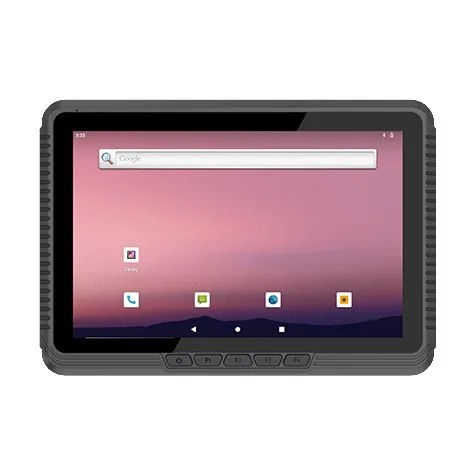
| BV-V10T-10 10.1" Android | 1000 cd/m² standard | IP65 | Removable battery | Wheelhouse, processing area, grading station |
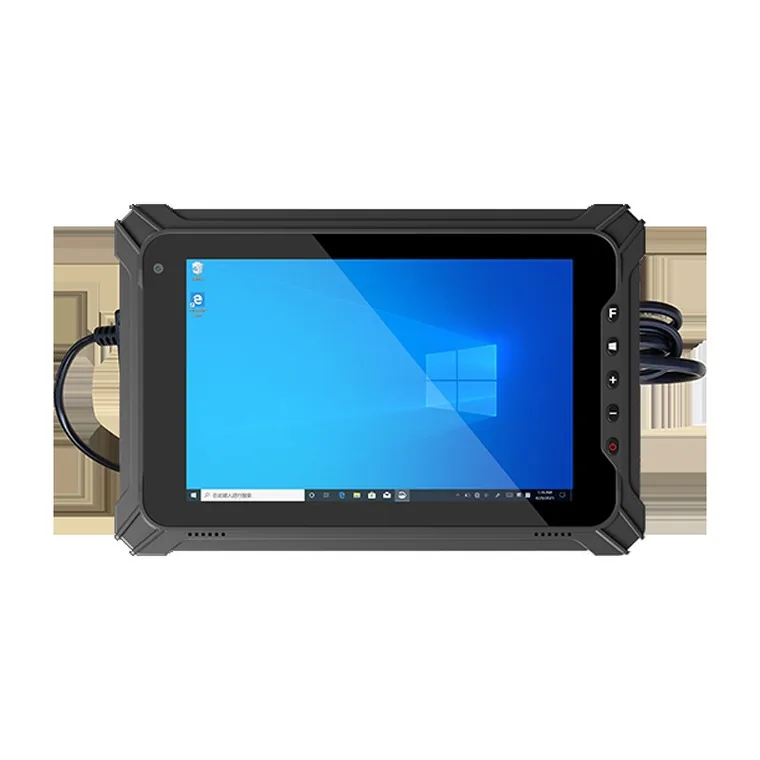
| BT-I87J 8" Windows 11 | 550 · 1000 optional on HD panel | IP65 | Confirm at quote | Open deck, wash-down, spray |
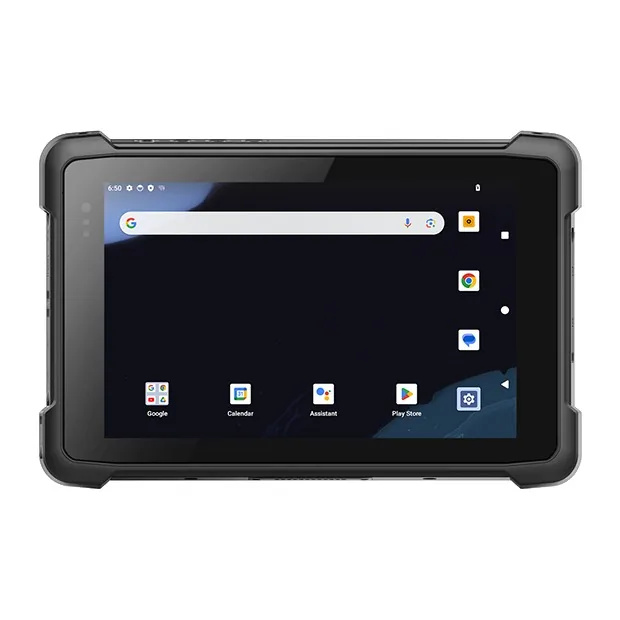
| BT-T81X 8" Android | 550 cd/m² | IP65 | Confirm at quote | Aisle and hold counts, 2D imager, fits between racks |
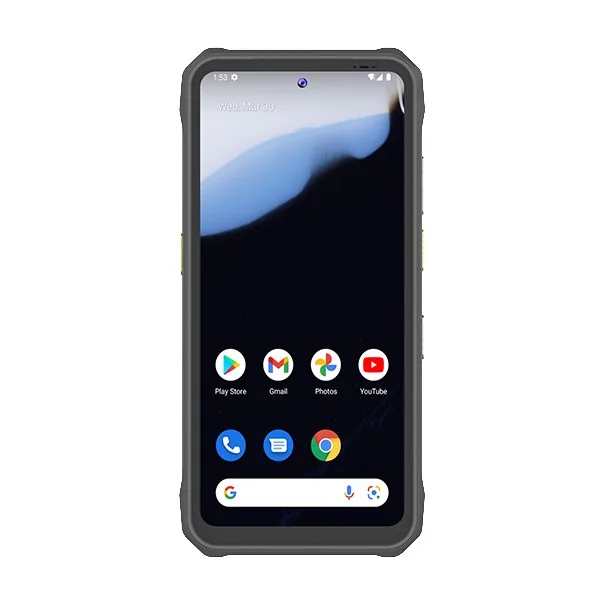
| BP-P1 6.56" Android | 670 cd/m² | IP68 | Confirm at quote | Wet-area photo and voice, no scan head |
| BP-T2 Ultra 10.95" Android 15 | 450 cd/m² | IP68 | Sealed | Cabin and office only |
| BP-T1 MAX 10.95" Android 14 | 320 cd/m² | IP68 | Sealed | Cabin and office only |
The two shaded rows are our own models, and they are marked cabin only. They are good devices with panels that suit an office, and the brightness figures say so. We would rather show you the limit now than have you find it in the first week of a trip.
Five places on a vessel, five different devices
A single model cannot cover a boat. The question is not which tablet is best, it is where the work happens and what that place does to the hardware.
What we quote for a working vessel
Mixed batches are normal here: two tablets for the wheelhouse, six handhelds for the crew, one terminal for the bridge. They ship together.
The part that is not a data problem
Catch registration and grading are data workflows. Voice beyond coastal coverage is not. On a vessel working outside LTE that gap is covered by a multi-mode terminal: satellite voice and short message, digital radio for ship-to-ship, AIS reception for traffic awareness, in one housing.
We quote it as a separate line, because frequency allocation and airtime are country-specific. The same terminal is legal in one fishing ground and not in the next, and a supplier who does not ask where the boat operates has not understood the product. Before we quote, we confirm two things with you: the constellation coverage over the actual grounds, and how the airtime is activated in your flag state.
Sample first, spares with the batch
One unit, sample pricing
Take a single unit to the boat and test it at noon, with wet hands, in the place the work actually happens. No minimum order.
Test it against yours
Bring the device the crew uses today. Fifteen seconds side by side on deck settles the specification question faster than any datasheet comparison.
Batch with spare packs
Quote includes spare batteries, cradles and mounts, and a swap path for a failed unit so a crew is not idle waiting for a repair.
Before you ask
What brightness do we actually need on deck?
1000 cd/m2 is the entry point for open-deck work in direct sun, and it has to be the standard panel rather than an optional upgrade, because an option that has to be ordered becomes a delay on every batch. Below that figure the device is a wheelhouse and cabin tool. Anti-glare cover glass matters as much as the number, because reflectance puts the sky on top of the content.
Is IP68 enough on its own?
No, and it is the most misleading single number in this category. Plenty of IP68 tablets are sealed correctly and carry panels at 320 to 450 cd/m2, which makes them poolside devices. Ingress protection answers one question, whether water can get in, and says nothing about readability, salt corrosion, battery access, or whether the port covers still seat after a year.
Can the battery really be changed at sea?
On the models we quote for cabins and processing areas, yes. The pack is removable and spares ship with the order. We recommend two packs per device up front, because the incremental cost is small against a crew waiting for a charge.
Do you supply the satellite and radio side as well?
Yes, as a separate line. A multi-mode terminal covers satellite voice and short message, digital radio and AIS reception in one housing. It is quoted separately because frequency allocation and airtime are country-specific, and the same model is legal in one fishing ground and not in the next.
Salt, gloves and no network
The four things that decide whether a device survives a season at sea.
All questions01Do the Android units ship with GMS?
02What warranty do you give?
03What about MDM and Android Enterprise?
04What happens when a unit fails in the field?
Testing on a deck beats another datasheet
Tell us the vessel type, the grounds and the software already in use. You get two models, the accessory list, and the caveats attached.