Parking & Traffic Enforcement
The citation is printed on the spot — and has to still be defensible six months later.
Enforcement is the one mobile workflow where a hardware failure is not a retry — it is a citation that never existed. The officer is standing in front of the vehicle, the printer has jammed, and the evidence chain has to survive a legal review half a year later. That combination sets the hardware: a printer that reconnects by itself, a camera whose OCR result is confirmed rather than trusted, a battery that survives a car dashboard, and software that was written before the device was chosen.
Who actually makes the purchase
Municipal IT departments, enforcement-system vendors (ISV/SI) and parking operators running contracted patrols.
Where these projects stall
- Typical software in this stack
The print step sits inside the transaction
A warehouse can lose a scan and rescan it. A citation that fails to print cannot be handed over, and the space stays occupied. Printer pairing, paper storage and ESC/POS compatibility are part of the device decision, not an accessory order.
The enforcement client is older than the tender
Many e-ticketing platforms run on Win32 or a pre-API-28 Android build maintained by a local integrator. New Android handhelds arrive, the app will not install, and the pilot restarts as a software migration nobody budgeted for.
Evidence quality decides the dispute, not the hardware
Plate OCR read as O instead of 0 sends the notice to the wrong registered owner. Timestamp drift from a dead RTC battery makes the citation contestable. The device has to make both auditable by default.
How the information actually moves
This is the part that decides the device. Each step below has a different requirement for screen size, scan engine and connectivity.
Enforcement programmes we can talk about
Same workflow, same failure points, different scale. The kit column is what was actually deployed.
 8 h → 30 min
Retail & apparel
Fashion chain, 200+ stores
Full stock-take of a two-floor store, done before opening instead of after closing.
UHF RFID handheld + fixed reader at the stockroom door 10 M parcels / day
Parcel & logistics
Global logistics hub
Sortation reads at belt speed; no manual re-scan when a label is creased.
Pistol-grip UHF reader + vehicle terminal on the tug 1,800 spindles
Production & MES
Smart textile mill
Spindle-level traceability replaces paper travellers on the spinning line.
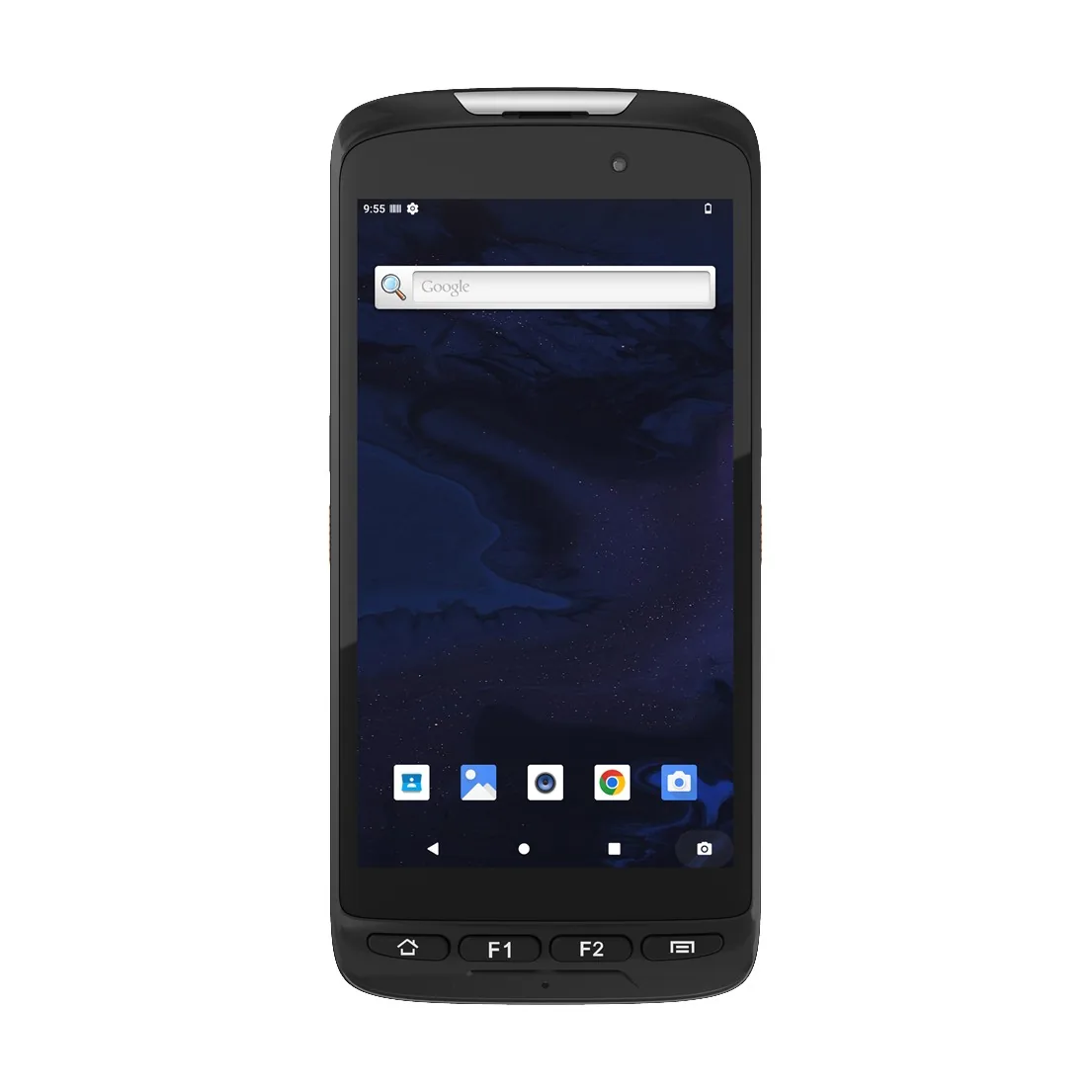
Rugged tablet at the line + UHF handheld for the doff roundDevices we quote for this deployment



Before you ask
The questions that come up on almost every project in this sector, answered before the first call.
All questions01Does the device pair with a 58 mm printer without re-pairing all day?
02Our enforcement software is a Windows program. Do we have to rewrite it?
03Can we test it on a real shift before tendering?
04Can you supply five units for a pilot?
05Do the Android units ship with GMS?
06What warranty do you give?
Running a enforcement project?
Send the workflow and the software stack. You will get two models and the caveats, not a catalogue.