Hospitals do not buy handheld terminals because they want to go paperless. They buy them because a medication error, a mislabelled specimen or an untraceable implant is a serious and expensive event, and every one of those errors starts with a manual check that somebody performed from memory. Barcode scanning at the point of care removes the assumption.
Where the errors actually start
The weak points are not in the software. They are in the moments when staff move between the patient and the system:
- Bedside medication and infusion. If the patient, the order and the drug are checked by hand, the wrong item can reach the wrong patient.
- Specimen collection. A tube that is not bound to the patient at the moment of collection can be mixed up or lost in transit.
- Goods-in at the pharmacy. Batch numbers and expiry dates have to match the purchase order, and manual entry lags behind the deliveries.
- High-value consumables and implants. UDI rules require a record from goods-in through the operating room to the patient.
- Stock and expiry. Goods past their date must be blocked, and the earliest-expiring stock should leave first.
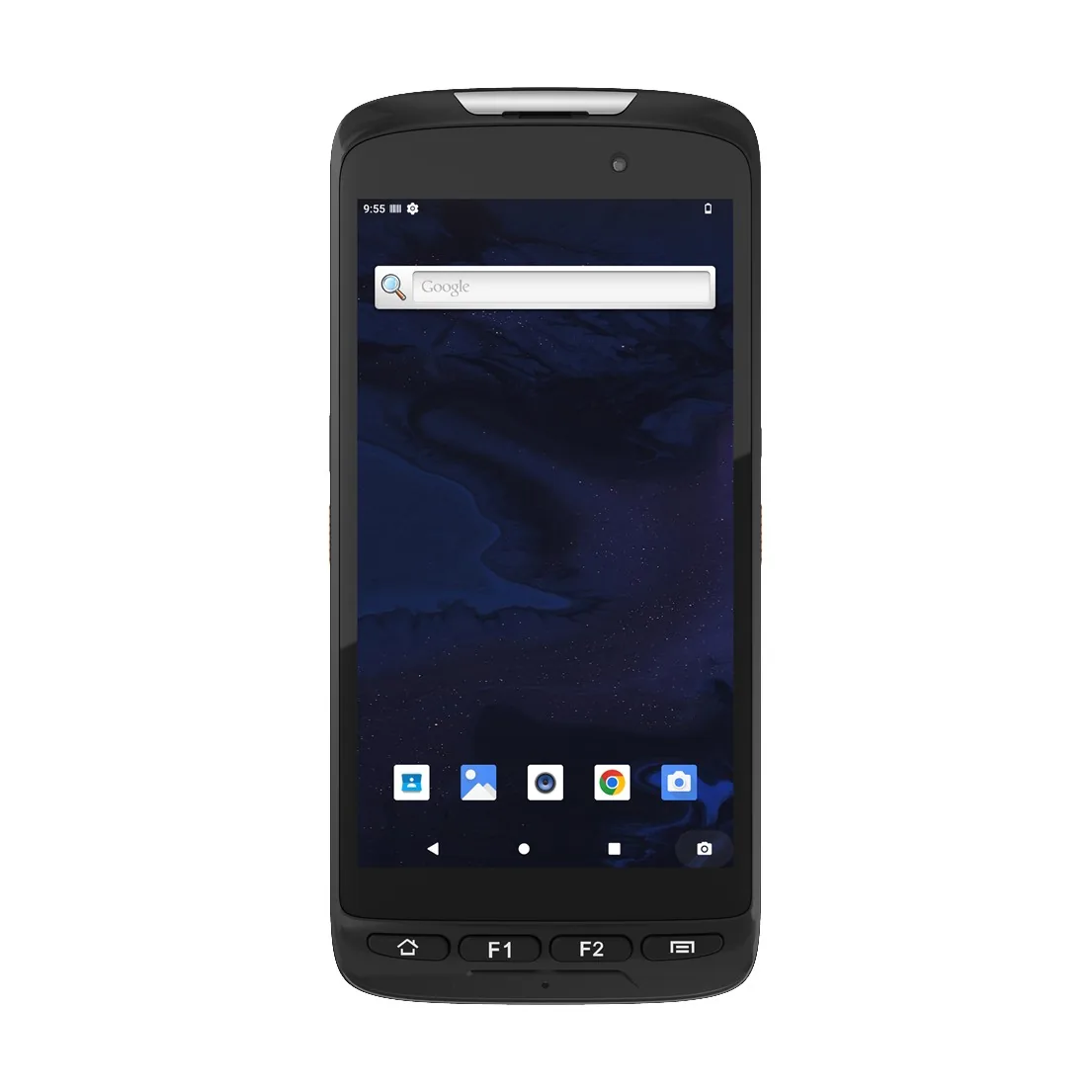
A rugged handheld such as the BH-F2 sits at the centre of these workflows, scanning the codes and writing the records directly into the hospital systems.
The eight workflows across the hospital
The same device follows the clinical and supply chain from ward to warehouse:
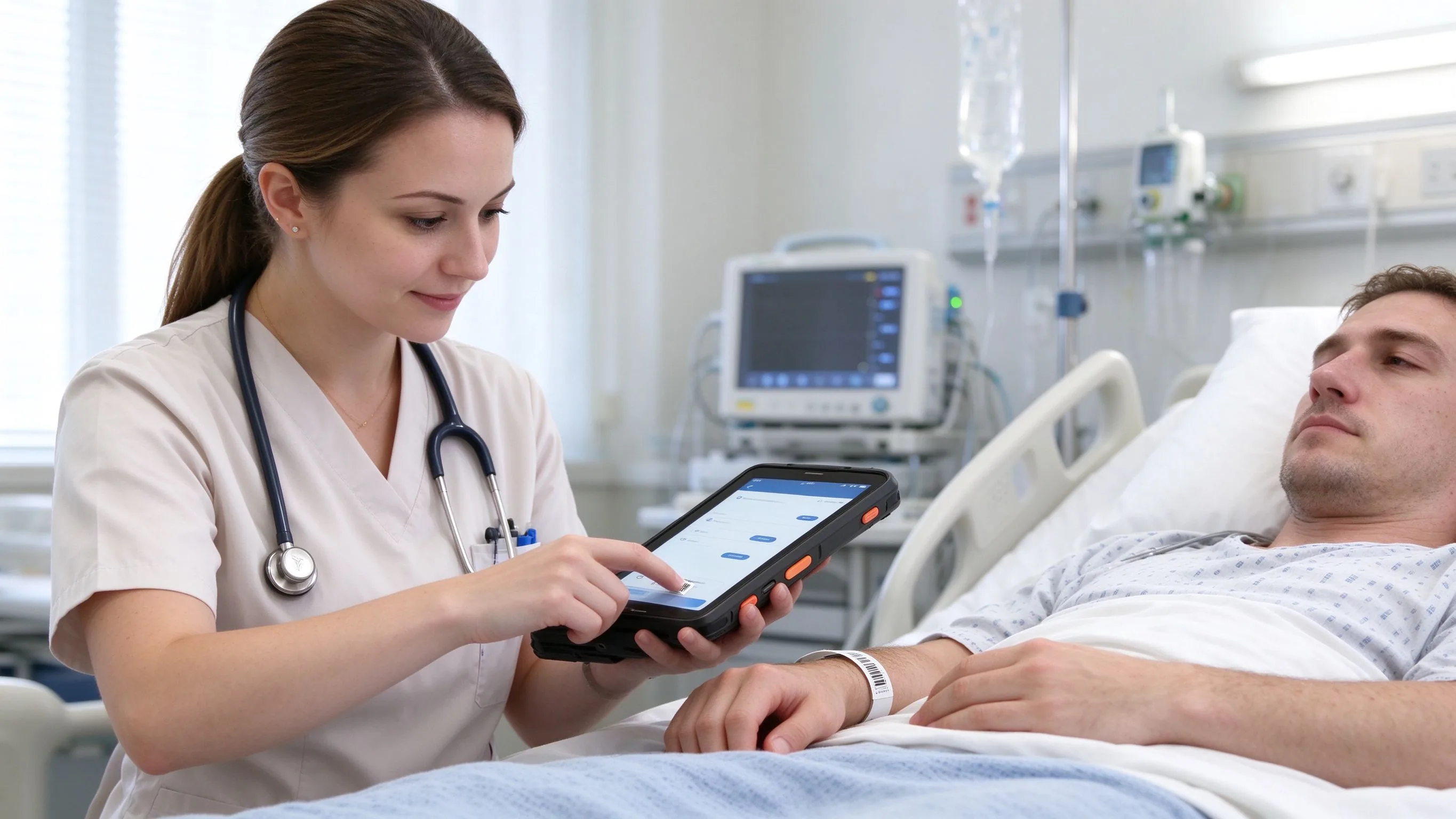
- Bedside nursing and patient verification — scan the patient wristband, call up the order, then scan the drug or infusion bag. A mismatch raises an alert before administration.
- Specimen collection and tracking — bind the tube to the patient at the bedside, then scan each handover point through to the laboratory.
- Pharmacy goods-in (GSP) — scan the outer barcode against the purchase order and capture batch and expiry at receipt.
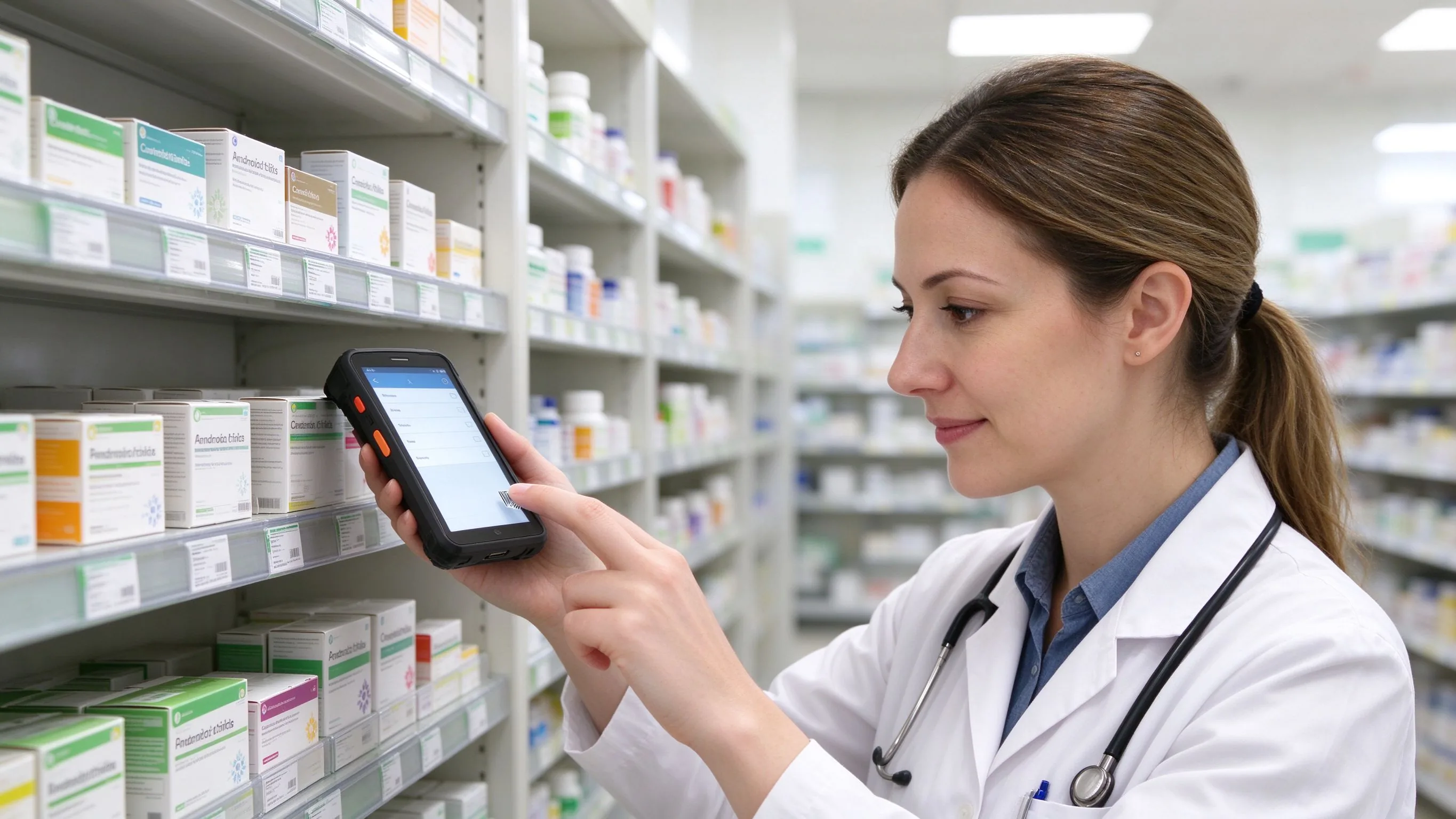
- Dispensing and dose checking — match the prescription to the medicine and record the operator who confirmed it.
- UDI traceability for high-value consumables (SPD) — link the device to the patient in the operating room, with the full chain recorded.
- Ward requisition and returns — receive the SPD task, scan items out and scan returns back into stock.
- Stocktakes — scan shelf and product codes, enter the counted quantity and let the system report the variance.
- Expiry management and FEFO — capture expiry at every step and block stock that is out of date.
What the hardware needs in a hospital
The clinical environment makes a different set of demands from a warehouse:
| Requirement | Why it matters |
|---|---|
| Imager that reads small, curved codes | Wristbands, vial labels, UDI DataMatrix codes and damaged labels |
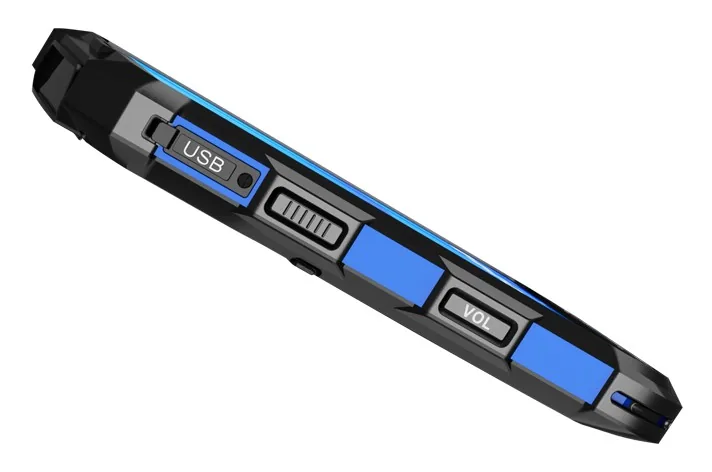
| IP67 sealing | Survives repeated wipe-down with hospital disinfectants |
| Dual-band WiFi with 4G fallback | Keeps the record moving where ward coverage is patchy |
| NFC at 13.56 MHz | Reads NFC wristbands, staff badges and medical RFID tags |
| 5050 mAh battery | Covers a full nursing shift without mid-round charging |
| Light 274 g body | Comfortable through a long shift of bedside scans |
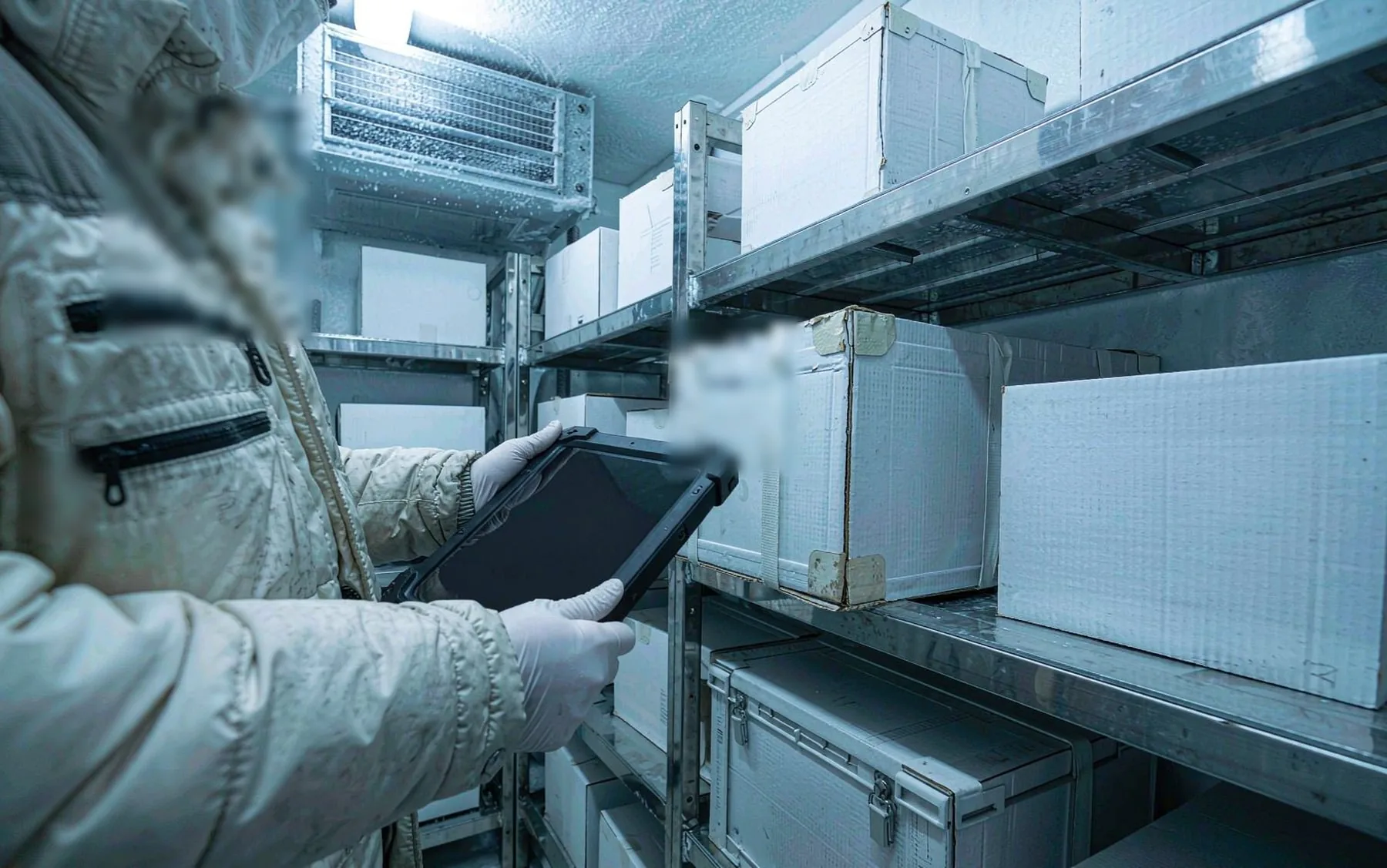
| −20 °C to 50 °C operating range | Works in cold storage as well as normal wards |
The F2 runs Android 15 with an open SDK, so the HIS, LIS, SPD or warehouse app installs directly and custom integration does not require replacing the hospital's core systems.
The bedside workflow
The nurse scans the patient's wristband or NFC band to confirm identity, then scans the medication or infusion. The system compares the patient and the drug against the order. If anything does not match, the terminal alerts immediately; if it matches, the action is recorded against the patient in the HIS. Vitals and observations can be entered at the bedside and uploaded in the same step.
UDI and the operating room
Implantable and high-value devices follow the UDI rule from the moment they arrive. The terminal decodes the high-density DataMatrix at goods-in, tracks the item when the ward requisitions it, and scans it against the patient's wristband in the operating room so the device is tied to the person who received it. Returns are scanned back in. The result is a complete chain that can be produced for an audit or an insurance review without rebuilding the history by hand.
Expiry, FEFO and the cold store
Pharmacy and consumable stock is managed on a first-expiry, first-out basis. The terminal captures batch and expiry at receipt, dispensing, requisition and stocktake, so the system can warn on near-expiry items and block anything out of date. The sealing and wide temperature range keep the same device working in the cold store and the cool room.
Integration without replacing the HIS
The F2 installs the Android clients for the HIS, LIS, SPD or warehouse system directly, and a standard SDK or API covers custom connections. On the network, dual-band WiFi is preferred and 4G takes over where the signal is weak; if the network drops, scans are cached locally and synced when it returns so no order or consumable record is lost.
The outer shell is not a dedicated antimicrobial medical material, so a protective case and routine wipe-down with medical disinfectant wipes are recommended. Send the systems you need to connect and the workflow — nursing, pharmacy or SPD — and we will confirm the configuration and the integration path.