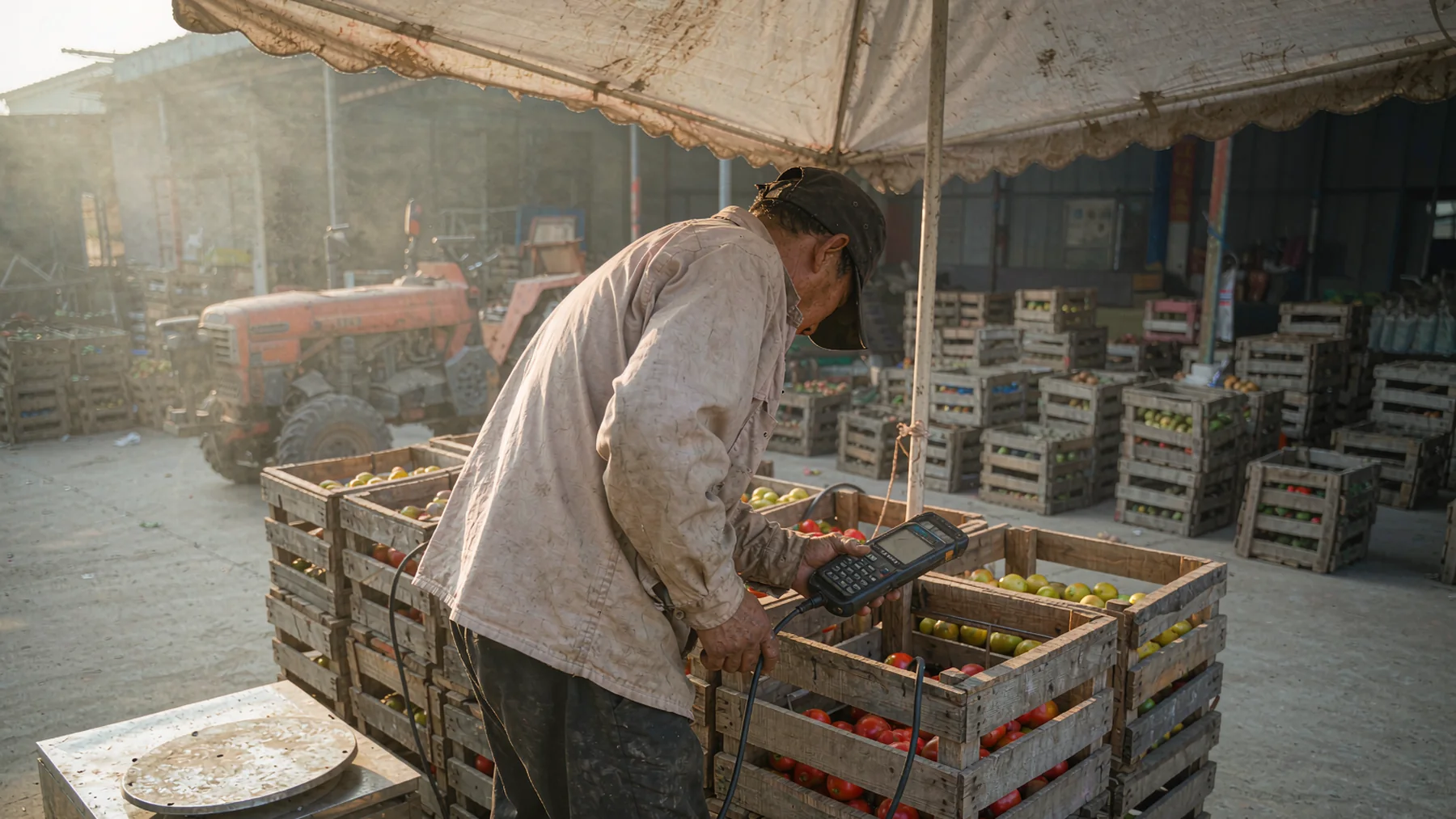
At 05:20 the parlour is at 90% humidity and the crush is full. Someone holds a reader in one hand, a tail in the other, and the animal is standing on the charging contacts. The record that comes out of this — animal ID, weight, treatment, pen move — is the one the processor will ask for eleven months later.
Farm inventory is the least forgiving rugged-device market there is, and it is almost never specified as one. An operation buys a handheld because the paper notebook failed an audit, then finds the barn is a corrosion chamber with a water hose in it.
Three tag technologies, three readers
Most livestock hardware mistakes start here, because "read the ear tag" describes three unrelated physics problems.
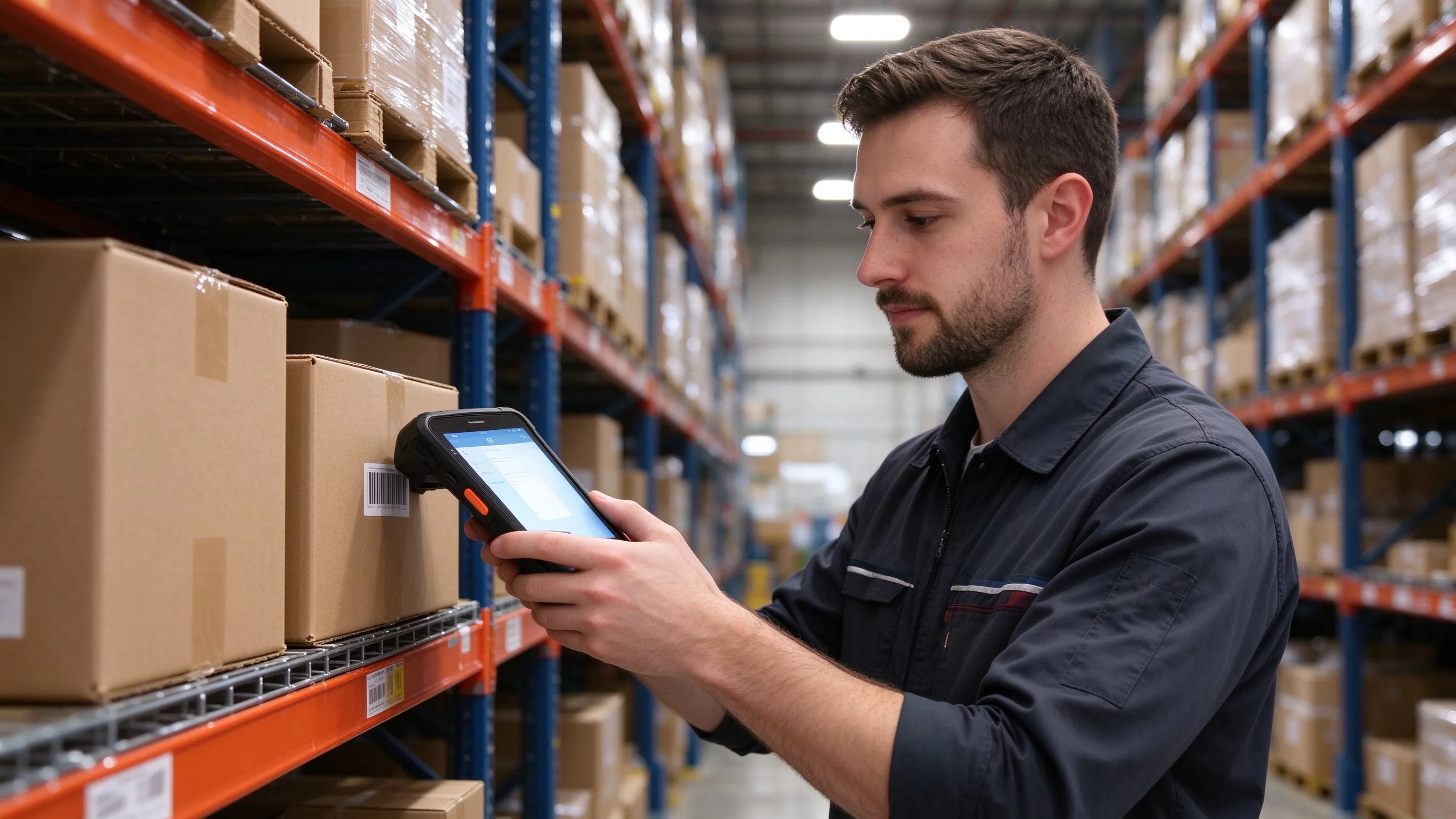
Printed visual tags. A management tag carries a laser-printed barcode or QR on flexible TPU, usually 0.3–0.5 mm modules, wrapped around a dirty ear. This is a 2D imager job: 10–30 cm working distance, angled illumination to cut glare, enough resolution to decode a curled, manure-flecked label on the first press. A phone camera gets it on the third attempt, which is why staff go back to writing on their forearm.
Low-frequency electronic ID (LF, 134.2 kHz, ISO 11784/11785 HDX and FDX-B). This is the statutory tag in the EU, Brazil, Australia and much of the world, read by a stick reader at 20–50 cm — not by a handheld's built-in radio. If compliance runs on LF, buy the stick reader from a livestock specialist and the handheld for everything downstream of the read.
Ultra-high frequency tags (EPC Gen2, 860–960 MHz). UHF is growing fast where group reads matter, because a handheld reads at 1–5 m instead of touching each ear. The catch is physics: water absorbs UHF, so a wet hide and ear cut the read rate, and a metal headgate bounces signal into phantom reads. A Bluetooth reader such as the BR-A5 — 5 m class, IP65, 14 hours — keeps the antenna at the ear while the PDA screen stays free for the form.
Get this map right and the rest of the specification writes itself. Mix it up and you buy for the wrong radio, then blame the software.
Where the hardware actually dies
Four failure modes account for nearly every dead farm handheld we see returned.
Ammonia. Slurry gas attacks polycarbonate windows, lifts screen protectors at the edge and corrodes pogo pins faster than any drop test predicts. A barn device needs sealed port covers, a replaceable protector, and charging indoors.
Wash-down. IP67 means one metre of fresh water for thirty minutes — not a 100-bar lance at the parlour wall. No handheld in this class is IP69K, so: wipe, dunk briefly, never jet a gasket. And the gasket is the story. Most water damage follows a battery swap where the seal seated on a strand of straw.
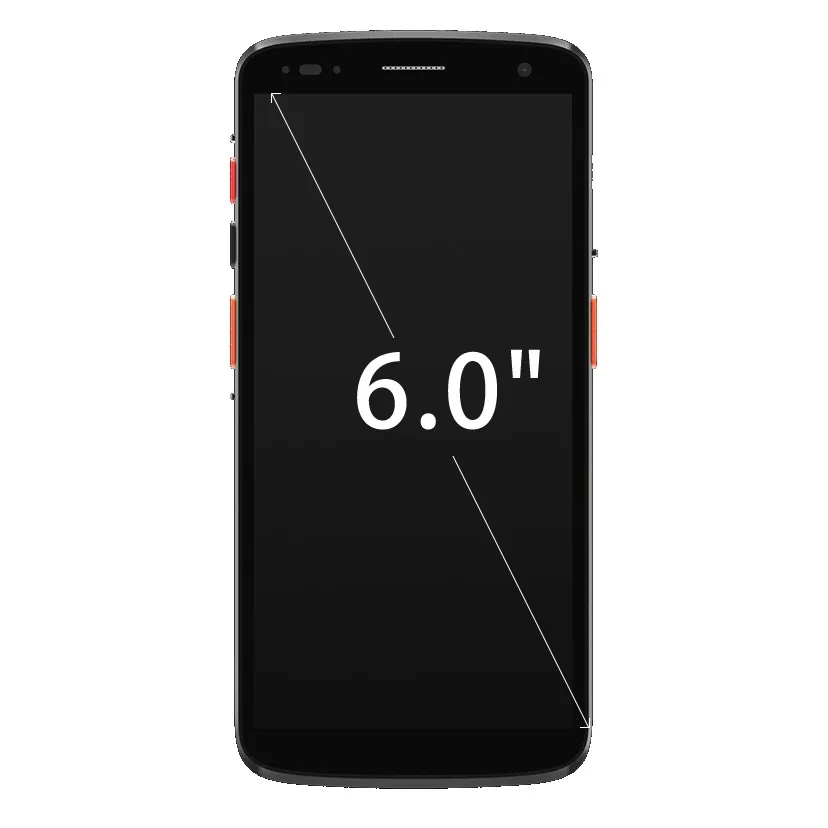
Concrete and slats. The 1.5 m six-sided rating on a device like the BH-F2 is measured on a lab floor. Yours falls 1.4 m onto slatted concrete, corner first. Mass helps: a 274 g unit carries far less energy into that corner than a 600 g one, which is why the small handheld outlives the big one in a pen. A device in the slurry channel takes the shift's records with it.
Sun and cold. Midday yard work needs 500 nits as a floor; a 350-nit panel is an indoor device. At −18 °C a 5,050 mAh pack behaves like 3,500 mAh, so the fix is procedural: pack in an inside pocket, spare kept warm, rating to −20 °C rather than −10 °C.
Glove touch is a panel decision, not a setting
"Supports glove operation" is on almost every rugged datasheet and means different things. A capacitive panel with boosted sensitivity reads a dry nitrile glove and handles a thick wet leather glove badly — the wrong way round for livestock work, where the glove is thick and wet.
Test the panel in the state it will be used: wet glove, manure on the fingertip, screen also wet. If the operator must remove the glove, the device failed a hygiene barrier as well as a workflow.
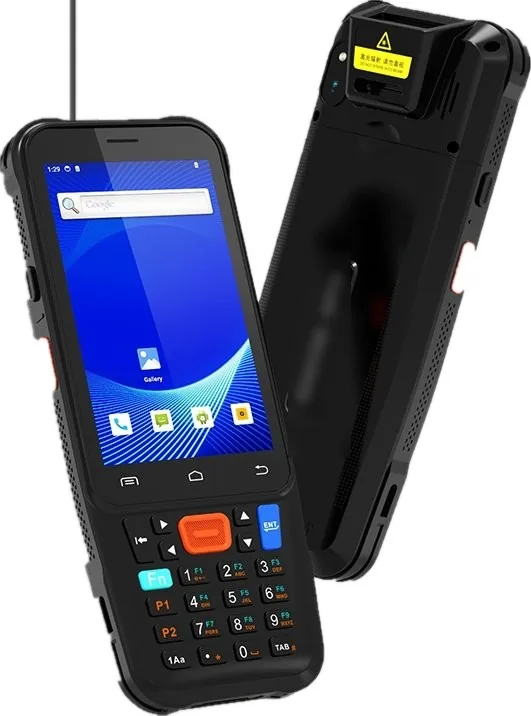
Then look at what the finger does. Scanning is a trigger pull; weights, doses and pen counts are digits, and digits on wet glass are where transposed numbers enter the herd record. The BH-F1 — 4-inch, 245 g, keypad area, 2D imager — trades screen room for entry you can do blind. Right for a crush-side count, wrong for a twenty-field form.
The weight that never gets typed
A 600 kg animal weighed to 1 kg is 0.17% precision. Typing that from an indicator into a handheld adds a 1–3% human error rate, and a growth curve built on that noise hides a real health problem.
Nearly every modern scale streams weight over Bluetooth SPP or BLE. The handheld should take it directly, only when the indicator flags stable, and store the raw string beside the parsed value. Same argument for the milk meter and the dose calculator. This is the highest-return software requirement on a farm, and the one most often skipped because the app was written for a phone.
Spec sheet: three shapes for three jobs
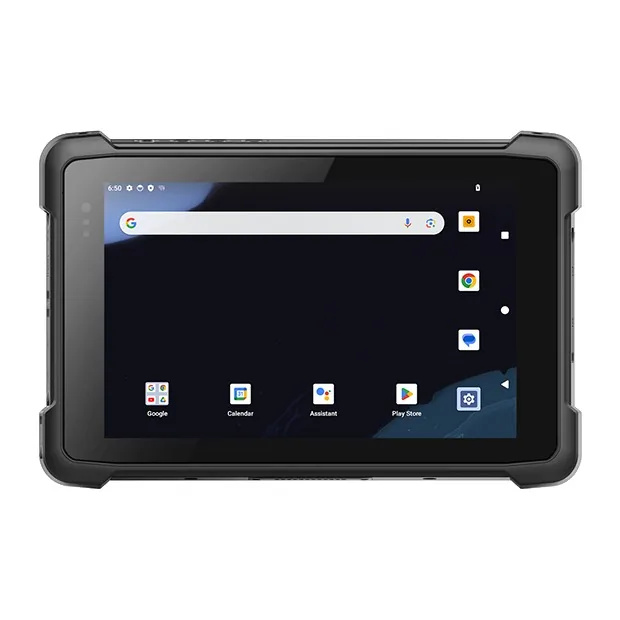
| Decision | 4-inch keyed handheld | 6-inch scanner handheld | Phone-form outdoor device |
|---|---|---|---|
| Example | BH-F1 | BH-F2 / BH-F5 | BH-P1 |
| Weight | 245 g | 274–300 g | ~311 g |
| Screen | 4.0-inch, 480×800 | 6.0-inch, 720×1440 | 6.56-inch, 670 nits |
| Sealing | IP67 | IP67 | IP68 |
| Drop | 1.5 m | 1.5 m six-sided | 1.5 m, powered on |
| Battery | 5,000 mAh | 5,050 mAh | field-swappable pack |
| Scan engine | 2D imager | 2D imager, NFC | no hardware imager |
| Right job | Crush-side counts, dose entry | Tag reads, pen moves, photos | Supervisor calls, maps, welfare checks |
The third column has no scanner. A phone-form device is excellent for the herd manager who needs photos, calls and a map — and useless at the crush, because a camera is not an imager and a soft key is not a trigger. Splitting the fleet by role beats one device that pretends to do both.
Where a handheld is the wrong tool
- LF compliance work. A stick reader does it better. The PDA holds the record; it need not be the antenna.
- Ultrasound and lameness scoring. These want a tablet on a stand, not a device in a pocket.
- Herd software built for a desktop. If it assumes a 1,366-pixel window and four columns, a 6-inch screen makes it worse.
Eight checks before you commit a season
- Read twenty of your own tags — dirtiest, oldest, most curled — outdoors at midday. Count first-press reads only.
- Repeat with a wet glove and a wet tag. Every second attempt is real cycle time.
- Weigh a real animal through the real indicator and confirm the value lands without a keystroke.
- Fill a treatment record with no signal, force-close the app, reopen, reconnect — exactly one record must arrive.
- Swap the battery with manure on your hands, then inspect the gasket. If that is awkward, water gets in within a month.
- Drop one unit from the crush rail onto your own floor, corner first, then read the worst tag in the yard.
- Leave a unit in the parlour for a week of wash-down; check for protector lift and contact corrosion.
- Log battery from first milking to last task, with scanning, scale and photos running.
The record is the product
Audits are about the record, not the device. Two requirements decide whether it holds: an offline queue that commits locally and replays exactly once, and an identifier chain that never needs a live lookup.
Treatment entries are the sharp edge. Withdrawal periods count from the last dose, so a duplicated record, a mistyped ear number or a batch that never synced end the same way: an animal cleared for slaughter when it should not have been. That is a recall, not a support ticket.
Send the setup rather than a model number — species and head count, the tag standard you are legally required to read, whether a scale already streams weight, how the barn is cleaned, where signal dies — and the reply is a device mix with the reading method settled. WhatsApp +86 158 8972 3515. A photo of your crush and the tag tells us more than a spec sheet.