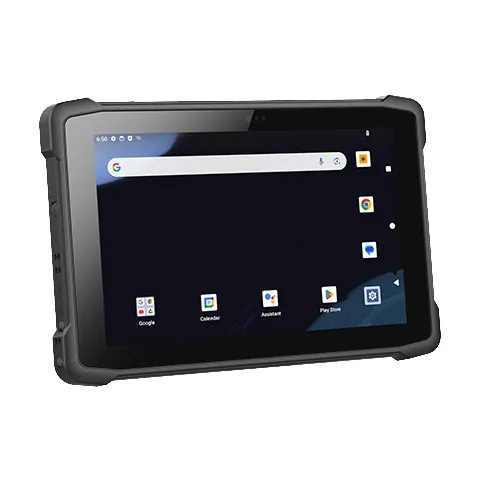
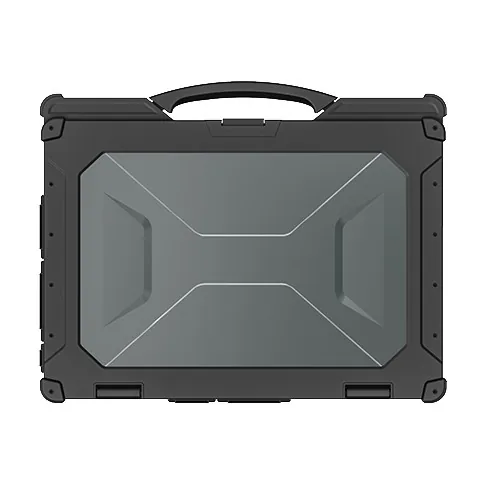
At 05:40 the yard is already loud: reversing alarms, a compactor at fast idle, a driver shouting over both. The crew has a route sheet, a handheld for bin tags and exception forms, and a PoC radio clipped to a shoulder strap. By nine o'clock one of the two is in the cab and the other is in somebody's hand — and which one is missing depends on who last walked back to the truck.
That split is the most common equipment decision in municipal waste and street operations, and it is usually made by accident. The depot buys radios because voice is a safety requirement, and handhelds because the council wants evidence that a bin was emptied or a fly-tip cleared. Nobody specs the two together, so the crew carries both, charges both, and loses one of them.
Voice and data fail for different reasons
A radio fails when the speaker is drowned out, the key will not press through a glove, or the battery dies at hour nine of a ten-hour shift. A handheld fails when the imager will not read a wet label, the screen washes out in sunlight, or the forms app drops an exception report because the yard has no coverage.
That is two engineering chains, which is why merged devices disappoint. A phone with a PTT app is not a radio: the app competes with the camera for the microphone, the speaker is tuned for media rather than speech, and the PTT button is a soft key a gloved thumb cannot find while the truck is moving.
The radio side has honest, unglamorous specs. A 3.1-inch PoC handset at about 210 g with a 3,800 mAh pack runs roughly 16 hours of talk on a 5/5/90 duty cycle, behind a Ø32 mm 2 W speaker and dual-microphone noise reduction. It is IP54 with a 1.2 m drop rating — a radio, not a wash-down device. Nothing about that is exciting, which is exactly why crews trust it.
What the noise floor asks of the speaker
Do not specify loudness from a datasheet. Specify a test: stand one metre away, run the rear loader at working speed, and see whether a sentence survives. Compactor noise sits well above the level where a media-tuned speaker stops being intelligible, and the failure is not silence — it is a sentence you half-hear and act on wrongly.
Two microphones with noise reduction matter more than a bigger speaker for the person on the other end. In a cab with the window down and the PTO running, the dispatcher hears wind and hydraulics unless the device does near-field beam-forming. Test it by calling the real dispatcher from the real cab.
Six things a converged device must do
These are software and key-level requirements, which is why procurement skips them.
- A hardware PTT key with long-press lock. Side-mounted, programmable, reachable in a work glove, distinct from the scan trigger. Lock matters when the crew is carrying a bin and cannot hold a key down.
- A PoC client that starts at boot and survives sleep. If the crew must open an app to be reachable, they are not reachable after the first break.
- Audio priority rules. PTT must duck media and navigation audio, and the forms app must release the microphone when PTT asks. Otherwise the first call arrives mid-voice-note and both fail.
- A GPS policy tuned to the shift. Continuous high-accuracy polling empties a 5,000 mAh pack before lunch. Route evidence needs a fix every few minutes plus one per stop event, not a one-second track log.
- An offline queue with replay. Bin audits and cleansing forms get filled where there is no signal — under a flyover, in a basement bin store. The form must commit locally, survive a reboot, and replay exactly once.
- A battery you can swap in the cab. A charging cradle is fine for a spare; it is not a plan for the primary device.
Then the physical layer: IP67 for wash-down and leachate, glove and wet-finger touch, 500+ nits for the midday street, and an industrial 2D imager rather than a camera scanner. A camera decodes a clean label slowly; an imager with a hardware trigger reads a bin tag behind a wheel at arm's length, first press.
Where the split still wins
If voice is ninety per cent of the job and the form is one screen at the end of the round, the radio stays. Two devices is an annoyance; a converged device with a dead battery at 14:00 is a crew that cannot call for a tip run and cannot close its jobs either.
The pattern that survives real depots is role-based. Drivers and crew leads carry the converged handheld, because they own both the voice channel and the route record. Loaders who only need to talk carry the 210 g radio. Supervisors carry a 6.78-inch device with a 20,000 mAh pack, because their day is maps and callbacks rather than tags. One dispatch console, three device shapes.
For depots that also run weighing, bin-asset tagging and container audits, the criteria behind the best rugged PDA for warehouse scanning question apply here too — imager grade, trigger ergonomics, drop rating — with two additions: a speaker that survives hydraulics, and a key that works through a glove. An Android PDA with a 2D scanner that cannot be heard is a data device only.
Spec sheet: three shapes, three jobs
| Decision | PoC radio (voice only) | Converged 6-inch handheld | Supervisor 6.78-inch |
|---|---|---|---|
| Weight | ~210 g, strap clip | ~275 g, holster | ~600 g, vehicle dock |
| Battery | 3,800 mAh, ~16 h talk | ~5,000 mAh, hot-swap | ~20,000 mAh, every second night |
| Sealing | IP54, 1.2 m — out of the wash bay | IP67, 1.5 m, leachate-safe | IP68, rain and dust |
| Display | 3.1-inch, glanceable | 6-inch, glove touch, 500+ nits | 6.78-inch, 520 nits, 120 Hz |
| Voice | 2 W speaker, dual-mic NR | Needs PTT key and audio priority | PTT app plus earpiece |
| Data | None | 2D imager, forms, offline queue | Maps, complaints, photos |
| Temperature | −10 to 60 °C | −20 to 60 °C | −20 to 60 °C |
| Failure mode | Loses the record | Loses both without a spare | Loses the overview |
Eight tests that settle it in a week
- Measure the noise floor at the yard, the rear loader and the transfer station. Every audio claim after this is checked against those numbers.
- Call the real dispatcher from the real cab, window down, PTO running. If they ask you to repeat, the microphone array is not working.
- Run a shift in gloves. PTT, scan trigger, form submit, battery swap. Note every action that needed a second attempt.
- Log battery from 05:30 to end of round with GPS and PoC both live. A device needing a mid-shift charge needs a second battery in the budget.
- Fill an exception form in a dead zone, reboot, restore signal, confirm exactly one record reaches the back office.
- Start a voice note, then press PTT. Audio must hand over cleanly in both directions.
- Hose the device down the way the depot cleans kit, then read a wet bin tag. Leachate finds every unsealed port.
- Settle the console story before you buy: PoC platform, API, how groups map to rounds, and what happens when a crew crosses into a neighbouring authority's coverage.
The number that decides it
Count devices per crew per shift, not unit price. Two devices means two chargers, two spare pools, two failure paths and one guaranteed loss a month. One device means a smaller fleet, a single asset register, and a spare-per-depot policy that costs less than the reconciliation it removes.
Send the round rather than a product list — crew size, shift length, the noisiest point on the route, where signal dies, whether bins carry tags, and which PoC platform dispatch already runs — and the reply is a configured fleet with the voice requirements written down. WhatsApp +86 158 8972 3515. A ten-second recording of your yard at 06:00 answers more than a spec sheet will.